What Happened to Lincolns Guest Who Tried to Stop the Assassin?
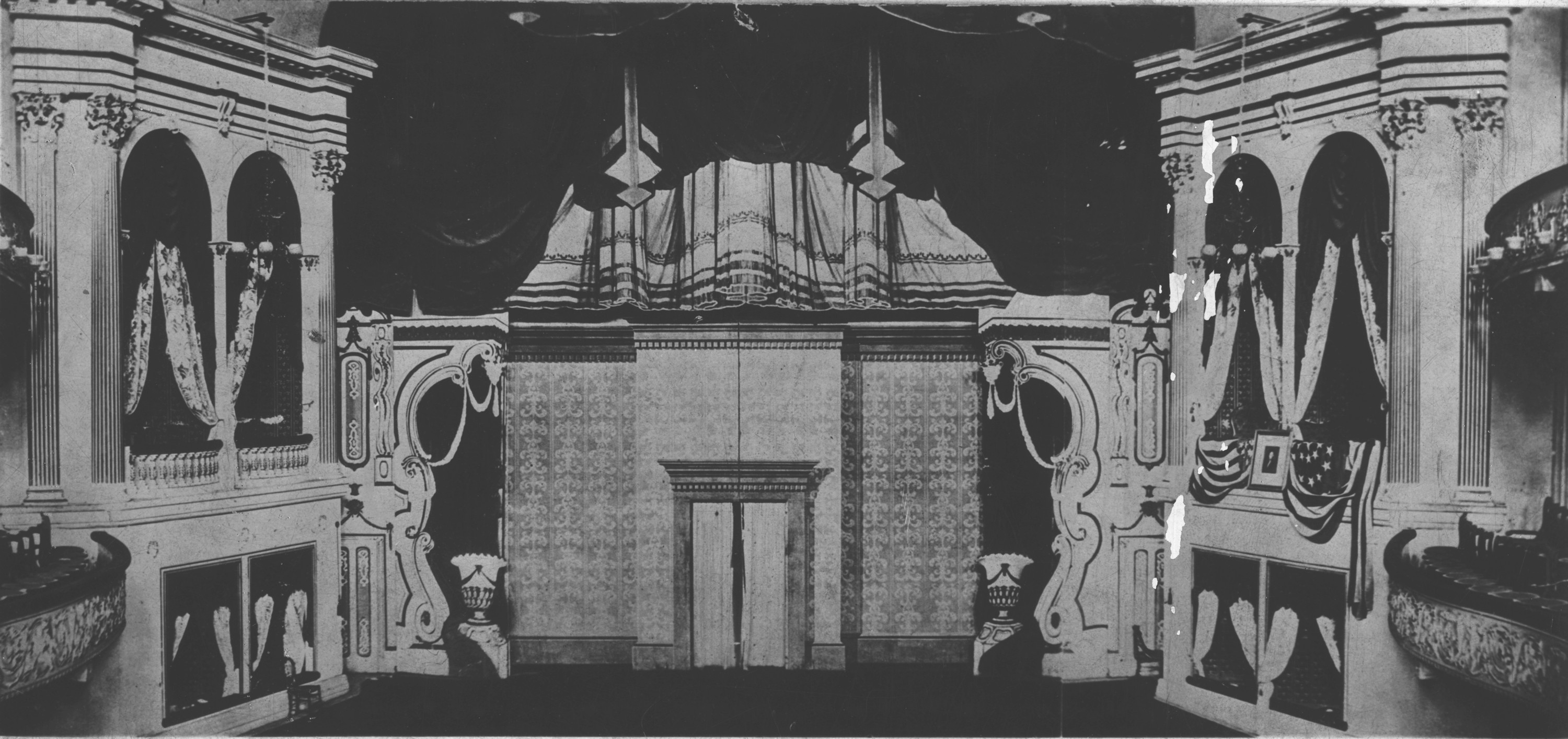
John Wilkes Booth likely hands his calling card to Charles Forbes, the president'due south messenger who is seated outside the door, and enters the vestibule of the box. Berth hides there, only steps from the president, waiting.
Lonely on stage, role player Harry Militarist delivers the funniest line of the play, and the audition erupts in laughter.
As the audience roars, Booth steps into the box. He fires a single bullet into the back of Lincoln'due south head. The president immediately loses consciousness.
I of the Lincolns' guests, Major Henry Rathbone, sees what has happened and tries to end Booth. Having dropped his pistol, Booth slashes at Rathbone's arm with a dagger.
Booth jumps over the box's railing onto the phase, catching his spur on the Treasury Guard flag adorning the front. He lands awkwardly, probable breaking his leg.
Booth flashes his bloody dagger on stage. A surprised Harry Militarist flees into the wings. Booth yells, "Sic semper tyrannis!" [Thus always to tyrants!] and "The South is avenged!"
Booth hobbles to the dorsum door of the theatre, where orchestra conductor William Withers attempts to stop him. Booth slashes at Withers, steps outside and jumps onto a waiting equus caballus.
Drs. Charles Leale and Charles Sabin Taft get into the Presidential Box. Later on examining the president, Leale declares that Lincoln volition die that nighttime. Soldiers carry Lincoln out of the theatre.
Eyewitness Testimonies
Bystander Testimonies
The Apparel Circle Section
The Orchestra Section
Backstage
On Stage & Presidential Box
Attending Doctors
U.Due south. flags were hanging throughout Washington in celebration of the cease of war. At Ford'due south Theatre, the President'southward Box was decorated with both an American flag and a U.S. Treasury Flag. Later on the assassination, this symbol reminded American citizens of the leader they had lost.
Soldiers carried the president out onto Tenth Street, hoping to return him habitation to die in peace with loved ones surrounding him, every bit was the Victorian platonic. The above epitome shows the theatre draped in mourning and protected by armed guards subsequently the assassination.
Panicked and shocked citizens poured out of the theatre, unsure if the president's assassination was a sign of an impending Confederate attack on Washington. That defoliation spread across the country, as this annunciation shows.
A bumpy ride from the theatre to the White House could mean immediate death for the president. Doctors agreed they should take Lincoln to a nearby location instead. The in a higher place image shows the dirt road outside of Ford's Theatre.
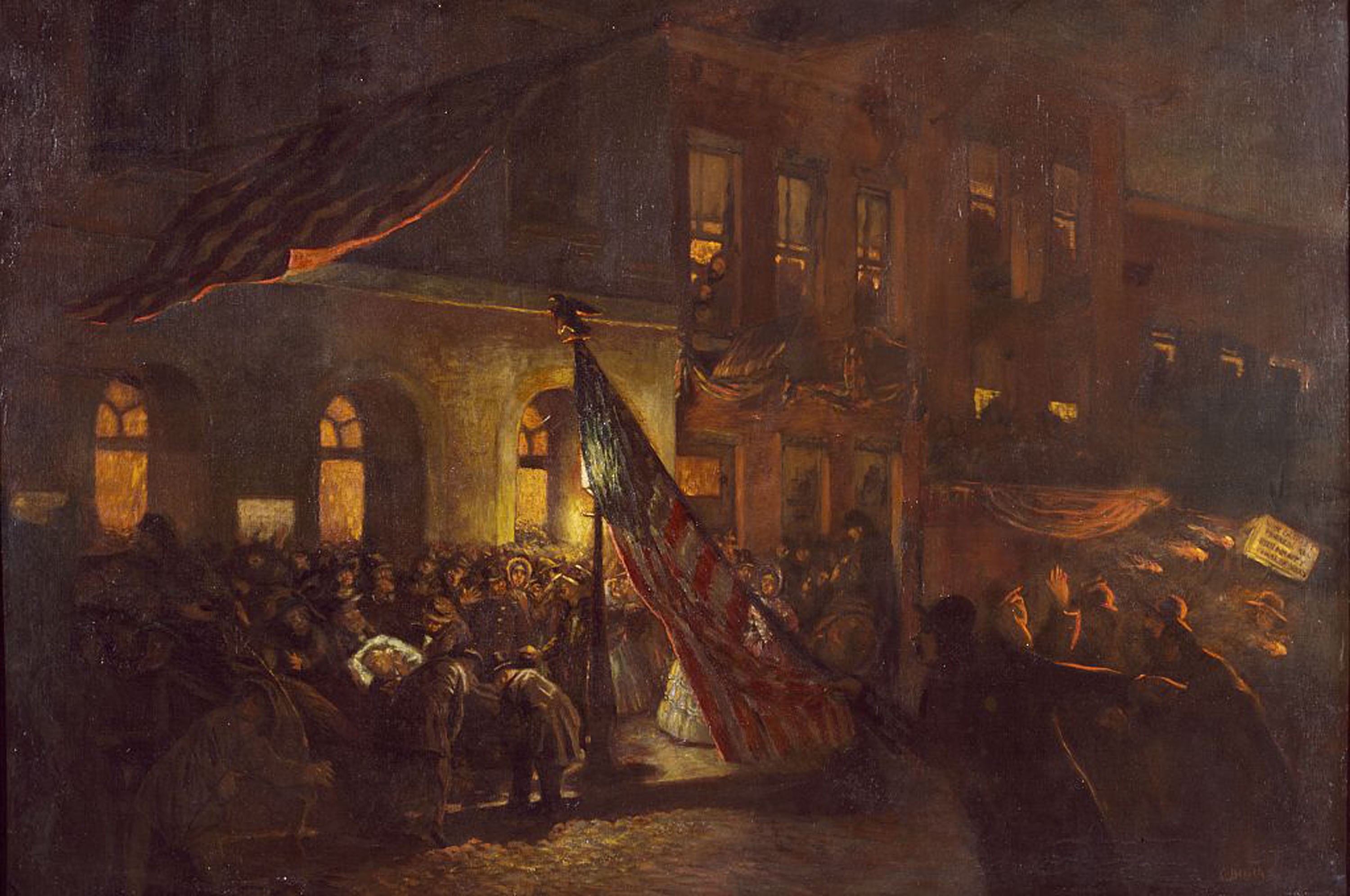
Like Carl Bersch, some eyewitnesses peered down from their balconies or windows at the chaos playing out on Tenth Street. This image shows the Petersen House and other nearby homes.
Henry Safford, who lived in the Petersen boardinghouse across the street, encouraged the group carrying Lincoln to bring the President into an empty room there.
A torchlight parade celebrating Lee'southward surrender passed by the theatre equally the Lincolns were within. This parade prompted Carl Bersch to sketch what soon became a scene of tragedy on 10th Street.
Slides
When U.S. Army soldiers captured and killed John Wilkes Berth, they emptied his pockets. What was Booth carrying during his 12 days on the run?
John Wilkes Booth killed Lincoln with this modest, single-shot pistol. Why would Booth apply a weapon with simply ane bullet?
The night of April fourteen, 1865, attendees of Ford's Theatre expected to run into a regular performance of "Our American Cousin." Piddling did they know that what they would run into that night would change the grade of American history.
Dr. Samuel Mudd claimed not to recognize the two men who appeared at his home the morn of April 15, 1865. Come across the pieces of evidence that disproved his story and sent him to prison house.
What did Lincoln article of clothing to Ford's Theatre the night John Wilkes Booth murdered him? Meet his apparel, including the special message sewn inside his overcoat.
When investigators arrested John Wilkes Booth's co-conspirators Lewis Powell and George Atzerodt, what bear witness did they find to connect them to the crime?
The presidency is known to age a person quickly. How did the stresses of the presidency and Civil State of war change Lincoln's appearance?
Due south. Southward. Elder, a welder in Springfield, Illinois, knew he was going to be a part of history when he was asked to seal the coffin of President Abraham Lincoln. See the tools he preserved for posterity from that important chore.
A pillow from Willie Clark's bed at the Petersen House is now a priceless relic. On it, yous can run across the blood of President Abraham Lincoln.
For seven weeks in summer 1865, the country'southward attending was fixed on a small courtroom in Washington, where eight of John Wilkes Booth's defendant co-conspirators were on trial for their lives. Run across memorabilia from that trial, including fragments of rope believed to be from four conspirators' nooses.
Source: https://www.fords.org/lincolns-assassination/
0 Response to "What Happened to Lincolns Guest Who Tried to Stop the Assassin?"
Post a Comment